Loading...
November 3, 2026
Consumer Credit in Australia: What It Means for Your Financial Plan
Lodgepro Team •Blog•5 min read

Consumer credit touches almost every aspect of modern Australian life — from credit cards and personal loans to car financing and “buy now, pay later” (BNPL) platforms. Used wisely, it can offer flexibility and opportunity. Managed poorly, it can trap individuals in cycles of debt that undermine long-term financial security.
For Australians striving to build wealth, credit management isn’t just about repaying loans — it’s about integrating borrowing decisions into a well-structured financial plan. This ensures that every dollar borrowed serves a clear purpose aligned with your goals, cash flow, and risk capacity.
This blog will cover:
What Is Consumer Credit?
Consumer credit refers to any arrangement where a lender provides funds or goods to an individual for personal, household, or domestic use, to be repaid over time, typically with interest or fees.
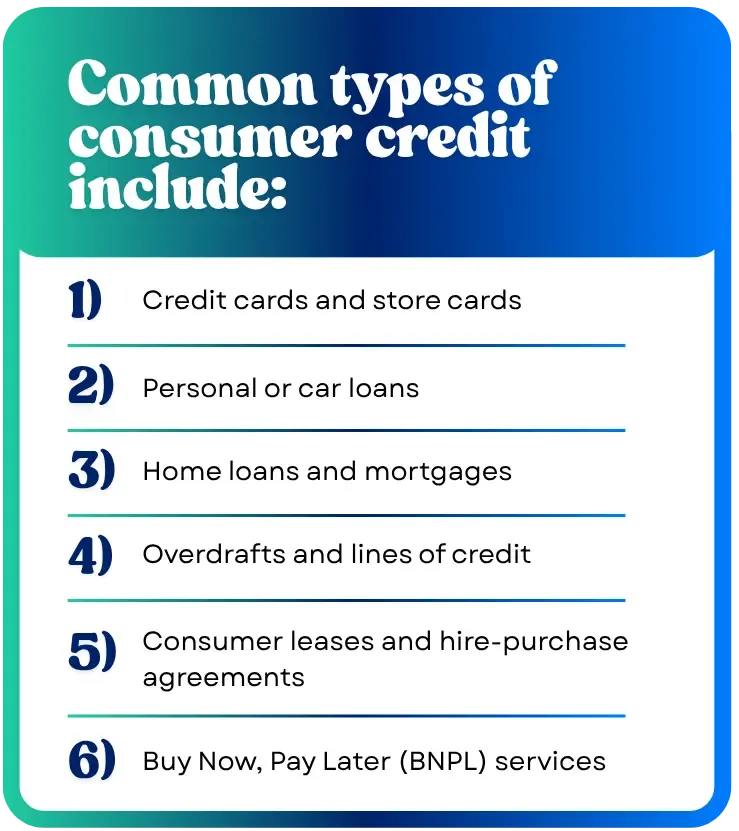
The Legal Framework
Australia’s consumer credit system is governed primarily by the National Consumer Credit Protection Act 2009 (Cth) (NCCP Act) and the National Credit Code. Together, these establish a national framework that regulates lenders and protects borrowers.
Under this framework:
Lenders and brokers must hold an Australian Credit Licence (ACL).
Credit providers must comply with responsible lending obligations, ensuring loans are suitable and affordable.
Consumers are entitled to clear disclosure of fees, interest rates, and repayment terms.
Borrowers have rights to hardship variations, default notices, and dispute resolution through the Australian Financial Complaints Authority (AFCA).
These laws are enforced by the Australian Securities and Investments Commission (ASIC), which monitors compliance and takes action against misconduct.
Consumer Rights and Protections
Borrowers in Australia enjoy strong legal protections, including:
1. Responsible Lending – Lenders must verify your income, expenses, and capacity to repay without hardship.
2. Disclosure Obligations – You must receive a written contract detailing rates, fees, and total repayment costs.
3. Hardship Assistance – If you face financial stress due to job loss, illness, or emergencies, you can apply for a hardship variation to adjust repayment terms.
4. Default Notices – Lenders must issue a formal notice (usually 30 days) before repossessing secured goods or pursuing court action
5. Dispute Resolution – You can escalate unresolved issues to AFCA, a free and independent complaints body.
6. Protection from Unfair Conduct – The law prohibits misleading, unconscionable, or predatory lending practices.
These safeguards ensure that consumers are not exploited or trapped in unfair contracts — but they work best when borrowers understand and assert their rights.

Here’s how consumer credit fits into financial planning.
1. Cash Flow and Budget Management
Every credit product introduces recurring repayments. A planner helps map these out within your monthly cash flow, ensuring you can comfortably meet obligations while still saving and investing.
They also model “what-if” scenarios — such as interest rate hikes or income reduction — to stress-test your ability to stay afloat.
2. Debt Prioritisation and Repayment Strategy
A key part of financial planning is identifying which debts to pay off first. Generally:
High-interest unsecured debts (like credit cards) are top priority.
Low-interest or deductible debts (such as investment loans) may be lower priority.
Mortgage or secured loans may be managed strategically for tax or liquidity benefits.
Financial planners often use “debt avalanche” (tackle highest interest first) or “debt snowball” (start with smallest balance for motivation) methods depending on your psychology and goals.
3. Leverage and Wealth Creation
Strategic borrowing can help fund wealth-building assets like property or investments. Financial planners assess whether leveraging debt enhances returns or increases risk.
They weigh the cost of borrowing against expected returns, ensuring you only take on “productive” debt — the kind that works for you, not against you.
4. Risk Management and Contingencies
A responsible financial plan includes protection measures such as:
Emergency funds to handle unexpected costs without borrowing further
Income protection or life insurance to cover loan repayments in case of illness or death
Appropriate loan structures (e.g., fixed vs. variable) based on your risk profile
5. Behavioural Safeguards
Credit can tempt overspending. Financial planners incorporate behavioural strategies such as reducing credit limits, automating repayments, or setting saving milestones to prevent emotional or impulsive borrowing.
Common Credit Pitfalls Australians Should Avoid
While Australia’s consumer credit market is robust, many fall into the same traps. Here are the biggest:
Relying on high-interest credit cards for everyday spending
Ignoring BNPL service fees and fine print
Borrowing to repay existing debt (debt spiral)
Over-borrowing on car or personal loans
Failing to request hardship relief when needed
Not checking credit reports for errors or defaults
Each of these can derail a financial plan but with professional guidance, they can be anticipated and managed.
How a Financial Advisor Can Help You Manage Consumer Credit
Financial advisors play a crucial role in helping Australians navigate the complex world of consumer credit. Whether you’re trying to pay off debt, improve cash flow, or plan a major purchase, their expertise ensures your credit strategy supports — not sabotages — your goals.
1. Comprehensive Debt Assessment
A financial advisor begins by analysing your full financial picture:
Current debts (balances, rates, repayment terms)
Income and expenses
Credit score and borrowing capacity (debt spiral)
Short- and long-term financial objectives
They identify high-cost debts, hidden fees, and inefficient credit structures that may be costing you money.
2. Crafting a Strategic Repayment Plan
Based on your cash flow and goals, an advisor develops a structured debt management plan that might include:
Prioritising debts by cost or urgency
Consolidating multiple debts into one manageable loan
Refinancing to lower interest rates or shorter terms
Setting realistic repayment milestones
3. Integrating Credit into Your Broader Financial Plan
An advisor ensures that your borrowing decisions align with your overall plan. For instance:
If buying a home: they’ll determine the optimal loan-to-value ratio, repayment term, and offset strategy.
If funding education or renovation: they’ll recommend whether to use savings, redraw equity, or seek a personal loan.
If investing: they’ll assess whether leveraging debt aligns with your risk tolerance.
4. Guidance During Financial Hardship
If you experience job loss, illness, or reduced income, a financial advisor can:
Help you apply for hardship variations under the National Credit Code
Negotiate revised repayment terms with creditors
Prioritise essential debts (like mortgage or utilities) over unsecured ones
Refer you to accredited financial counsellors for legal or debt relief support
Their goal is to stabilise your finances before the situation escalates to default or collection.
5. Refinancing and Restructuring
Advisors constantly monitor market interest rates and product features. They may recommend refinancing to:
Reduce interest costs
Shorten repayment terms
Switch from variable to fixed loans (or vice versa)
Consolidate multiple loans into on
They ensure you understand refinancing costs, fees, and implications for your credit file.
6. Behavioural Coaching and Accountability
Sometimes, the hardest part of managing credit is not the math it’s the mindset. Advisors act as behavioural coaches, helping you:
Set healthy spending limits
Avoid impulsive borrowing
Stick to repayment commitments
Celebrate progress toward being debt-free
Regular reviews and accountability meetings keep you disciplined and motivated.
7. Tax and Investment Efficiency
In some cases, advisors coordinate with accountants to make debt tax-efficient — for example, distinguishing between deductible investment loans and non-deductible personal debt.
They might also help you redirect savings from debt reduction into diversified investments once your liabilities are under control.
8. Protecting Your Credit Score and Future Borrowing Power
Advisors monitor how your credit behaviour affects your credit score — a key factor in securing better rates for future loans.
They help you correct errors, close unused accounts strategically, and plan borrowing moves that enhance (not damage) your financial reputation.
Case Study: From Debt Stress to Financial Stability
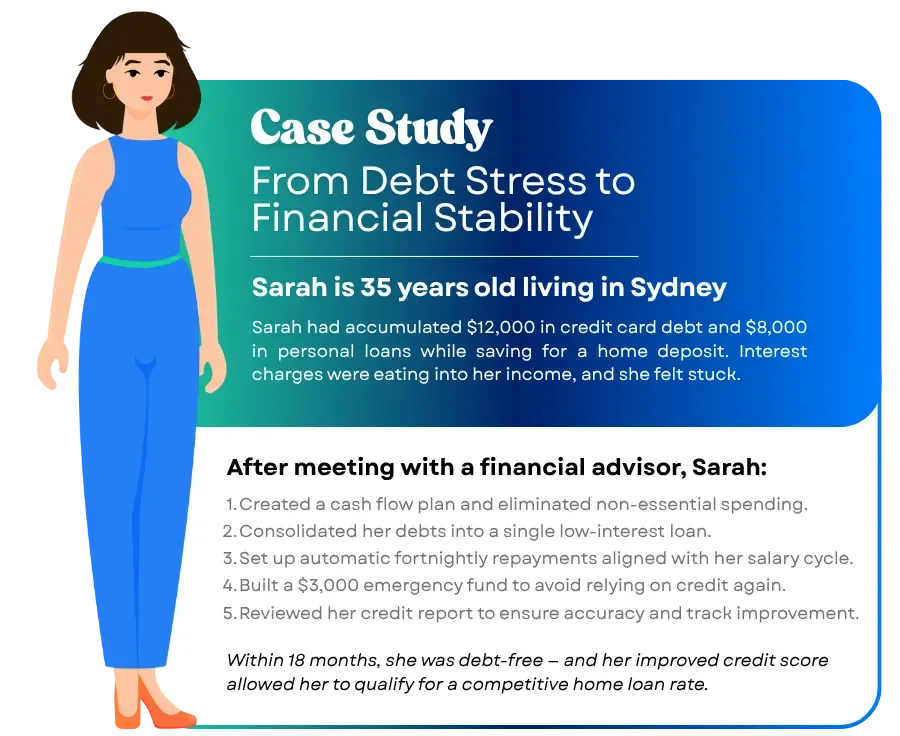
This case highlights how professional financial guidance can turn consumer credit from a burden into a manageable component of a successful financial plan.
Practical Tips for Smarter Credit Use
Borrow only what you can afford to repay comfortably.
Compare lenders — use ASIC’s MoneySmart calculators to assess total loan cost.
Pay more than the minimum on credit cards or personal loans.
Check your credit report annually (via Equifax or Experian).
Avoid using credit for depreciating assets or lifestyle spending.
Act early if you’re struggling — contact your lender or financial counsellor.
Maintain an emergency savings buffer of 3–6 months’ expenses.
Review your debt annually as part of your overall financial plan.
Conclusion
Consumer credit is neither inherently good nor bad — it’s a financial tool that requires skillful management. In Australia, strong legal frameworks protect borrowers, but personal discipline and informed decision-making remain the keys to success. Credit, when handled wisely, is not a barrier to wealth — it can be the bridge toward it.