Loading...
February 17, 2026
Individual Tax Return Due Date: What You Need to Know 2026
Lodge Pro•Blog•5 min read

Individual Tax Return Due Date: What You Need to Know 2026
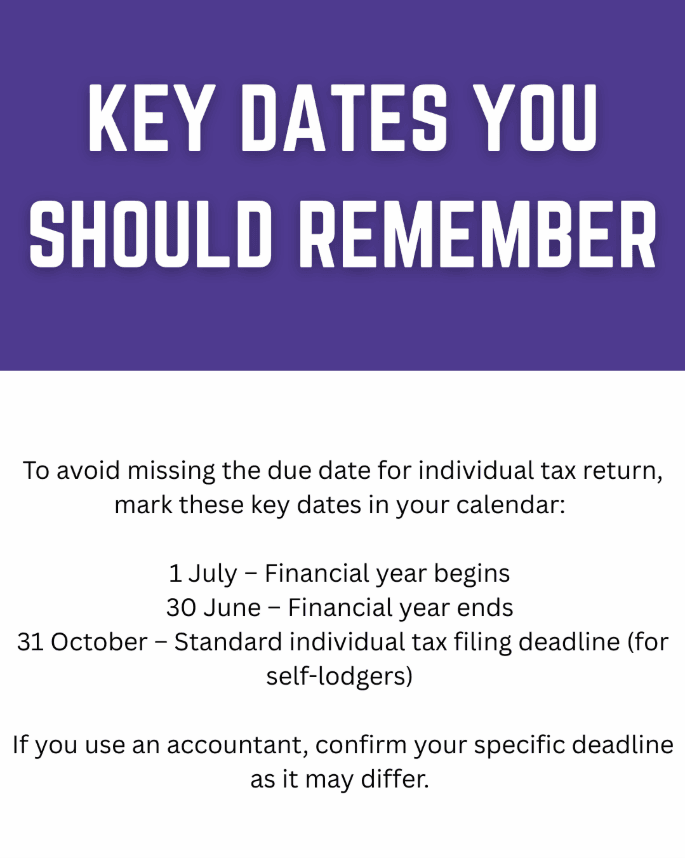
Understanding the individual tax return due date is one of the most important responsibilities for taxpayers. Every year, millions of individuals prepare and lodge their returns, yet many still feel confused about the due date for individual tax return submissions, extensions, penalties, and special circumstances.
Missing the individual tax filing deadline can lead to unnecessary stress, penalties, and interest charges. This guide breaks down everything you need to know so you can stay compliant and avoid costly mistakes.
What Happens If You Miss the Individual Tax Filing Deadline?
Missing the individual tax return due date can result in penalties and interest charges.
1. Failure to Lodge (FTL) Penalty
If you lodge late, you may be charged a Failure to Lodge penalty. This penalty increases the longer your return remains outstanding.
2. Interest on Outstanding Tax
If you owe money and fail to pay by the due date for individual tax return payment, interest may accrue daily until the balance is cleared.
3. Delays in Refunds
If you are expecting a refund, lodging late simply delays your payment.
If you realise you have missed the individual tax filing deadline, it is best to lodge as soon as possible to minimise penalties.
Can You Get an Extension?
Yes, extensions may be available in certain circumstances.
Lodging Through a Tax Agent
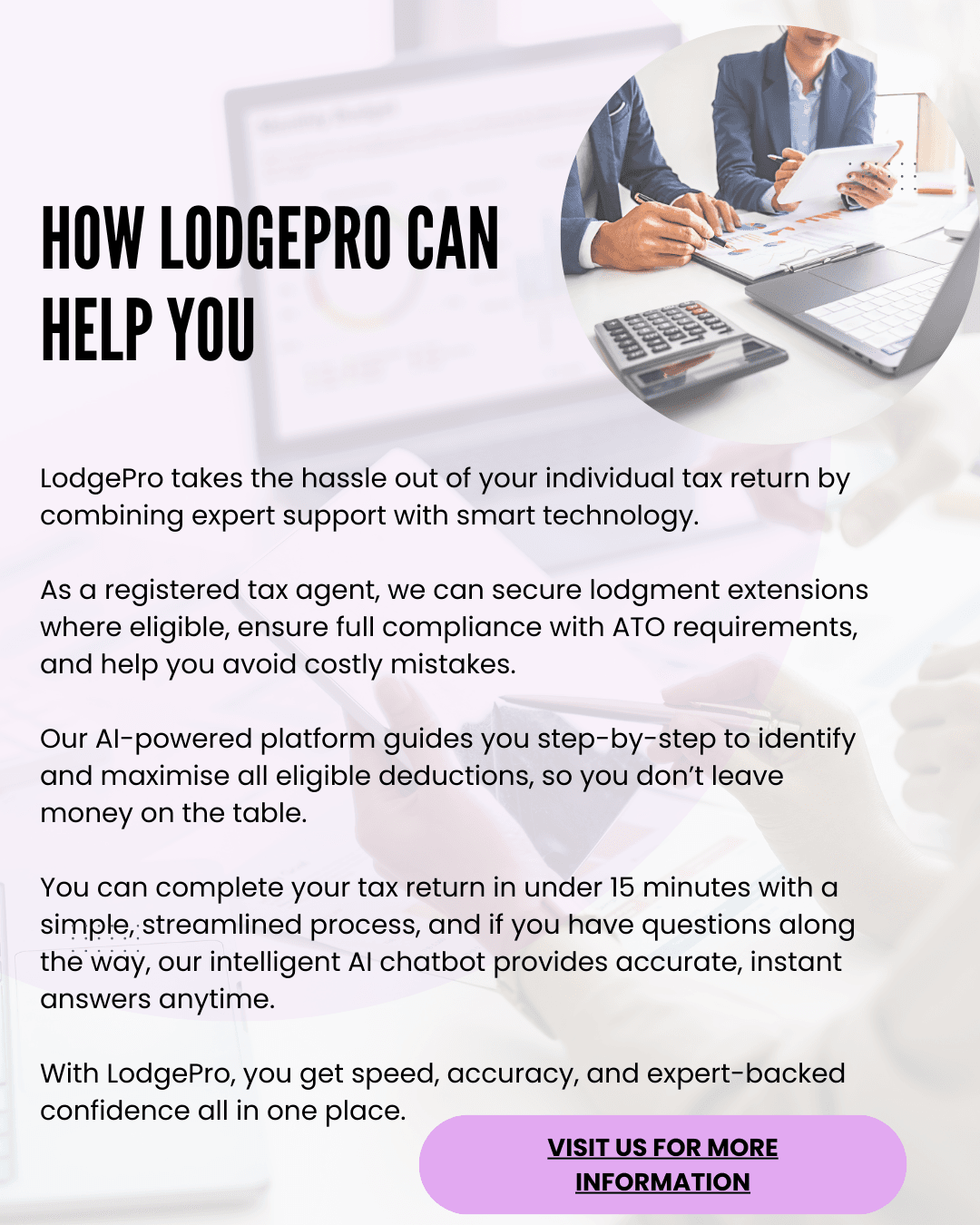
One of the most common ways to receive extra time is by using a registered tax agent. Agents often have extended lodgment programs approved by the tax authority.
However, you must:
Be registered with the agent before the standard individual tax return due date
Ensure prior returns are up to date
Special Circumstances
Extensions may also be granted due to:
Natural disasters
Serious illness
Unforeseen personal hardship
You typically need to apply formally and provide supporting documentation.
How to Prepare Before the Deadline
Preparation is the best way to avoid last-minute stress before the individual tax return due date.
1. Gather Your Documents Early
Collect:
PAYG summaries or income statements
Bank interest statements
Dividend statements
Rental property income and expense records
Work-related expense receipts
2. Track Deductions
Keep accurate records of:
Work-related travel
Home office expenses
Professional memberships
Education expenses related to your job
3. Review Pre-Filled Information
Many tax systems now pre-fill employer and bank data. Always double-check this information for accuracy before lodging.
Common Mistakes to Avoid
Many taxpayers unintentionally create problems by:
Waiting until the last minute to prepare
Forgetting additional income sources
Claiming deductions without receipts
Ignoring previous outstanding tax obligations
Assuming they do not need to lodge
Being proactive before the individual tax filing deadline significantly reduces the risk of errors and audits.
What If You Can’t Pay on Time?
It’s important to understand that the individual tax return due date and the tax payment due date may be the same or close together.
If you cannot pay your tax bill by the deadline:
Lodge your return on time anyway.
Contact the tax authority immediately.
Request a payment plan.
Most tax authorities are willing to arrange instalment agreements if you engage early.
Failing to lodge by the due date for individual tax return simply makes the situation worse.
The Role of a Tax Professional
Tax rules change frequently. A registered tax professional can:
Ensure compliance with the current individual tax return due date
Identify legitimate deductions
Reduce the risk of penalties
Help you access extended deadlines
Provide strategic tax planning advice
For individuals with investment properties, business income, or complex finances, professional assistance can be invaluable.