Loading...
July 2, 2026
Manual ATO Workflows: Why They Limit Accounting Firm Growth
Hyperdoc Team•Blog•5 min read
Manual ATO workflows reduce efficiency, increase compliance risks, and limit growth for accounting firms. By replacing spreadsheets and manual tracking with automation tools, firms can streamline operations, improve client experience, and scale sustainably without increasing administrative workload.
Table of Contents
Why Manual ATO Workflows Are Holding Firms Back
The Hidden Cost of Manual ATO Workflows
Why Workflow Scalability Matters for Growing Accounting Firms
How Manual Processes Impact Accounting Operations Efficiency
How Technology Enables Smarter Firm Growth
How Hyperdoc Helped an Accounting Firm Scale Smarter
As Australian accounting firms continue to grow, many are discovering that the processes that once worked perfectly are now slowing them down. From tracking lodgments and managing compliance obligations to chasing clients for information, manual ATO workflows can quickly become a significant barrier to growth.
What may seem like a manageable process for a small client base often becomes a major operational challenge as firms expand. The reality is that relying on spreadsheets, email reminders, and manual task management is no longer sustainable in an industry where efficiency, compliance, and client experience are critical.
In today's competitive environment, accounting firms need scalable systems that support growth, improve productivity, and reduce compliance risks.
The Hidden Cost of Manual ATO Workflows
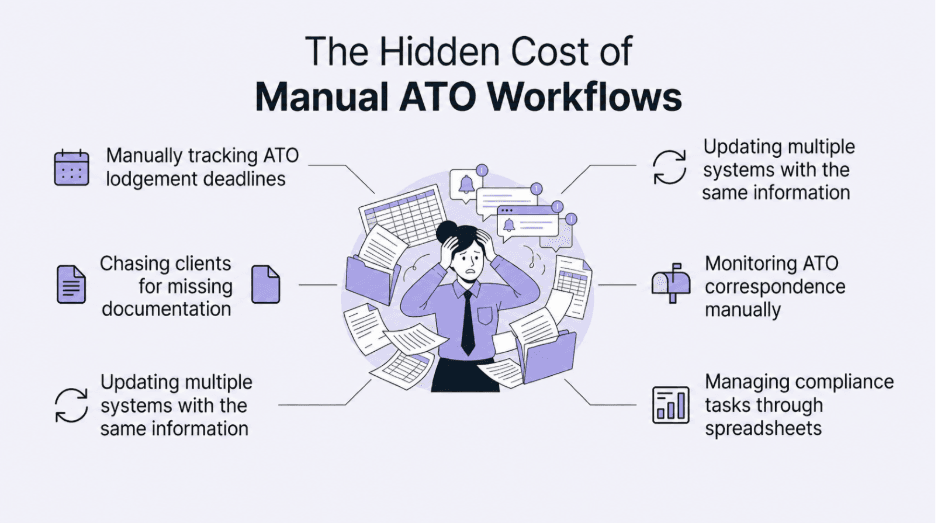
Many firms underestimate the true impact of manual ATO workflows on their business. While these processes may appear cost-effective, they often create hidden expenses through lost productivity, duplicated effort, and increased risk of errors.
Common challenges include:
- Manually tracking ATO lodgement deadlines
- Chasing clients for missing documentation
- Updating multiple systems with the same information
- Monitoring ATO correspondence manually
- Managing compliance tasks through spreadsheets
As client numbers increase, these administrative tasks consume more time and resources, reducing your team's capacity to focus on higher-value work such as advisory services and client relationships.
Why Workflow Scalability Matters for Growing Accounting Firms
Workflow scalability refers to your firm's ability to handle growth without significantly increasing administrative workload, costs, or operational complexity.
When accounting firms rely on manual processes, every new client creates additional administrative work. This approach eventually reaches a point where growth becomes difficult without hiring more staff or increasing overheads.
A lack of workflow scalability can lead to:
- Missed compliance deadlines
- Increased staff stress and burnout
- Inconsistent client experiences
- Higher operational costs
- Reduced profitability
By contrast, scalable workflows allow firms to maintain quality, consistency, and compliance regardless of client volume.
How Manual Processes Impact Accounting Operations Efficiency
Accounting operations efficiency is about creating systems that allow your team to deliver more value while spending less time on repetitive administration.
Manual workflows often create inefficiencies in key areas:
Duplicate Data Entry
Staff frequently enter the same information across multiple platforms, increasing both workload and the risk of errors.
Limited Visibility
When tasks are managed through spreadsheets and email threads, it becomes difficult for managers to monitor deadlines, workloads, and overall progress.
Delayed Client Communication
Manual follow-ups can result in inconsistent communication, creating frustration for both clients and staff.
Increased Compliance Risk
ATO obligations continue to evolve, and manual processes increase the likelihood of missed deadlines, overlooked notices, and compliance breaches.
Improving accounting operations efficiency requires firms to streamline workflows and reduce reliance on manual administration.
How Technology Helps smarter Firm Growth
Modern workflow automation and compliance management solutions are transforming how accounting firms operate.
Rather than manually managing every step of the compliance process, firms can automate routine tasks such as:
- ATO deadline tracking
- Client reminders and follow-ups
- Task assignments
- Document collection
- Compliance monitoring
- Progress reporting
This allows accountants to spend less time on administration and more time helping clients achieve their financial goals.
How Hyperdoc Helped an Accounting Firm Scale Smarter
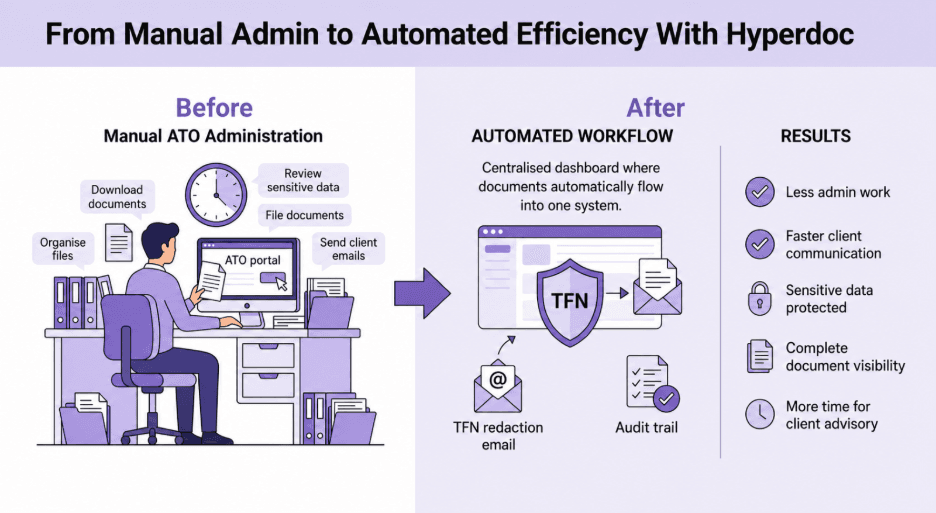
One Australian accounting firm came to Hyperdoc because their team was spending hours every week manually downloading ATO correspondence, organising files, redacting TFNs, and emailing documents to clients.
As their client base grew, these manual processes became difficult to manage and took valuable time away from client work.
With Hyperdoc, ATO correspondence is automatically retrieved, TFNs are automatically redacted, and documents can be reviewed and sent to clients from one central platform. Built-in audit trails and automated communication further reduce administrative effort.
The result?
✔ Less time spent on manual ATO administration
✔ Faster document processing and client delivery
✔ Improved data security and compliance
✔ More time for advisory and client service
Instead of managing paperwork, the firm can now focus on delivering greater value to clients while Hyperdoc handles the document workflow behind the scenes.
Eliminate manual ATO workflows and scale your firm more efficiently
Discover how Hyperdoc helps Australian accounting firms automate compliance management, improve visibility, and create scalable workflows that support sustainable growth.
Book your free demo today to experience the Hyperdoc difference.
Frequently Asked Questions
1. Why don't manual ATO workflows scale effectively?
As your firm grows, manual processes require more administrative effort for every additional client. This increases staff workload, creates bottlenecks, raises compliance risks, and often requires additional resources just to maintain service levels.
2. How can workflow automation improve accounting operations efficiency?
Workflow automation reduces repetitive administrative tasks such as deadline tracking, document management, client reminders, and compliance monitoring. This allows accounting teams to work more efficiently, reduce errors, and focus on higher-value client services.
3. How does Hyperdoc help automate ATO document management?
Hyperdoc automatically retrieves ATO correspondence, securely manages documents in a central platform, automatically redacts TFNs, and streamlines document review and client delivery. This reduces manual handling and improves compliance visibility.
4. What benefits can accounting firms expect from replacing manual ATO workflows with Hyperdoc?
Firms can reduce administrative workload, improve compliance management, process documents faster, enhance data security, and free up more time for advisory services and client relationship management, helping support sustainable business growth.
5. Is Hyperdoc suitable for small and growing accounting firms?
Yes. Hyperdoc is designed to support accounting firms of all sizes. Whether you're managing a small client base or experiencing rapid growth, Hyperdoc helps create scalable workflows that reduce administrative burden, improve efficiency, and make it easier to handle increasing compliance demands without significantly increasing overheads.